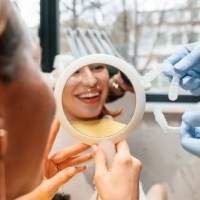
Laser teeth whitening-
Teeth bleaching
in Antalya, Turkey
White, healthy teeth are important not only for a beautiful smile but also for boosting self-confidence. However, drinking beverages such as coffee, tea, or red wine, or smoking, can cause stains on your teeth. Fortunately, modern dentistry offers an effective and quick solution to this problem in the form of laser teeth whitening. Compared to traditional methods, this procedure is performed in a shorter time frame in a clinical environment under the supervision of a specialist dentist and produces permanent, visible results. So, what is laser teeth whitening, what are its advantages, and is it suitable for everyone? Let's take a closer look at this method.
What are teeth whitening techniques?
Teeth whitening techniques
Mechanical cleaning
Mechanical cleaning is achieved by mechanically agitating the tooth surface using gels, pastes, or liquids (including toothpastes) to remove stains from the stained tooth surface by abrasive erosion. This routine polishing removes surface stains such as coffee, cigarettes, and red wine but does not change the color of the teeth.
Chemical whitening
Chemical whitening is done by leaving gels, pastes, or liquids in contact with the stained tooth surface for a certain period of time, which allows tooth staining to be removed by a chemical process. In this method, whitening is achieved by chemical degradation of chromogens in the tooth enamel. Typically, whitening gels containing hydrogen peroxide or compounds that release hydrogen peroxide in water are used. Gels may also contain thickening, stabilizing, and neutralizing agents.
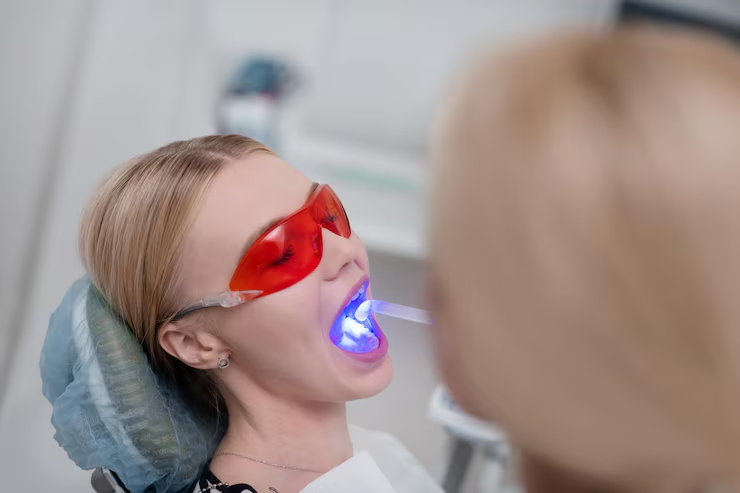
Laser-assisted teeth whitening
Lasers aim to increase the effectiveness of whitening agents and accelerate the release of free ions to the tooth surface. There are different types of lasers used in teeth whitening.
What are teeth whitening methods in Antalya?
Professional (in clinic) teeth whitening
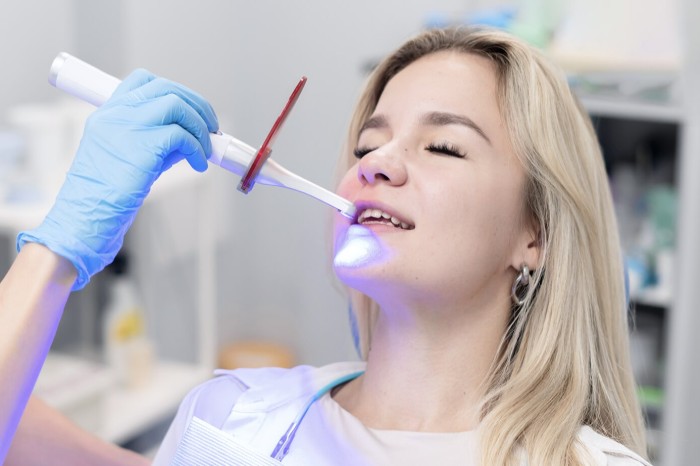
Laser teeth whitening
It is performed using a special gel and laser beam under the control of a dentist. It gives significant results in a single session.
Bleaching whitening
Whitening gels activated by LED or plasma light are used. Effective results are obtained in 30-60 minute sessions.
Home teeth whitening methods
Dentist-controlled transparent trays
Whitening is achieved in a few weeks with individually prepared trays and special gels.
Whitening strips
Thin strips adhered to the tooth surface remove light stains by containing hydrogen peroxide.
Whitening toothpastes
Contain abrasive particles or mild whiteners, but have a limited effect.
Natural and herbal methods
- A mixture of baking soda and lemon: Although it provides short-term brightness, it can damage tooth enamel and should be used with caution.
- Oil pulling with coconut oil: It supports dental health with its antimicrobial effect, but its whitening effect is weak.
What is the principle of laser teeth whitening?
Laser teeth whitening Antalya is based on the principle that a whitening gel containing hydrogen peroxide or carbamide peroxide is activated by laser light to remove stains and discoloration of tooth enamel. The process works as follows:
Gel procedure
The dentist applies a high concentration of whitening gel to the tooth surface. This gel contains chemicals with oxidizing properties.
Laser activation
Laser light with a special wavelength activates the whitening agents in the gel. The laser accelerates the gel to release oxygen molecules. These molecules chemically break down organic stains (coffee, tea, cigarettes, etc.) on the enamel.
Stain removal
The oxygen molecules oxidize the discoloring molecules (chromogens) in the enamel, making them colorless. This reveals the natural whiteness of the tooth.
Fast and controlled effect
The laser accelerates the action of the gel and targets deeper stains. The procedure usually takes 30-60 minutes and is applied in a controlled manner so that the tooth enamel is not damaged.
Who are suitable candidates for laser teeth whitening, and who are not?
Although laser teeth whitening is an effective aesthetic dental treatment, it may not be suitable for everyone. The determination of suitable candidates is made by the dentist's examination.
Suitable candidates for laser teeth whitening
Those with healthy teeth and gums
People without tooth decay, gum disease (gingivitis, periodontitis), or enamel erosion are ideal. Oral health problems should be treated before the procedure. Those with External Stain Problems: Laser whitening is very effective for people with superficial stains (extrinsic stains) caused by external factors such as coffee, tea, red wine, and smoking. Yellowish or brown-toned teeth usually give good results.
Adults (18 years and over)
Suitable for adults with complete tooth development. Generally not recommended for children and teenagers (under 18 years of age) as the enamel is still developing.
Those with realistic expectations
Suitable for those who want to lighten their natural tooth color by a few shades. However, it may have limited effect on very dark (gray or blue-toned) intrinsic stains (intrinsic stains).
People with no sensitivity problems or mild sensitivity
The procedure is more easily tolerated in people with minimal tooth sensitivity. In case of severe sensitivity, the dentist may take additional measures.
For whom is laser teeth whitening not suitable?
- Pregnant and Breastfeeding Women
- Those with excessive wear or sensitivity of tooth enamel
- Those with gum disease (periodontitis) or recession
- Those with fillings, veneers, or porcelain crowns
- Those with deep internal discoloration, such as tetracycline stains or fluorosis
- Individuals under the age of 18
- Those with asthma or hypersensitivity to chemicals
Are there cases where whitening is not effective?
Although laser-assisted teeth whitening is usually successful, in some cases it may not have the expected effect:
- Teeth with exposed roots.
- Teeth with 'white' fillings.
- Teeth with crowns or veneers.
- Root canal-treated teeth.
- Unhealthy teeth
What are the benefits and advantages of laser teeth whitening?
Laser teeth whitening Antalya is a popular method in cosmetic dentistry and offers many benefits and advantages.
Fast and effective results
- Laser teeth whitening usually lightens teeth by several shades in a single session (30-60 minutes), providing fast and noticeable results.
- It effectively removes external stains such as coffee, tea, and smoking.
Long-lasting effect
With proper care and lifestyle changes (avoiding stain-causing foods), results can last for 1-2 years or longer.
Minimally invasive
It works without damaging the tooth enamel, protects the tooth structure, and does not require a surgical procedure.
Increased self-confidence
A whiter and brighter smile provides aesthetic satisfaction and increases self-confidence.
Professional control
The procedure is safe and controlled because it is performed by a dentist. Gum and enamel health is protected.
Precision of laser technology
The laser activates the whitening gel, providing deeper and more even results. A more homogeneous whiteness is achieved compared to other methods.
Short-term process
While home kits take weeks, laser whitening is completed in a single session, which saves time.
The dentist can adjust
Customizable
the gel concentration and laser application according to the patient's tooth color and sensitivity.
Low risk of sensitivity
Modern laser systems and preventive measures (gum barrier, fluoride application) minimize sensitivity.
What are the risks and disadvantages of laser teeth whitening?
Although laser teeth whitening is generally a safe procedure, there are some risks and disadvantages.
Tooth sensitivity
Temporary sensitivity of the teeth after the procedure (especially to hot/cold foods) is a common side effect. This usually subsides within 24-48 hours but may be more uncomfortable for people with sensitive teeth.
Potential for enamel damage
Although rare, when applied incorrectly or repeated too often, whitening gel may cause microcracks or weakening of the enamel. This is usually the result of inappropriate concentration or frequency of application.
Allergic reactions
The risk of allergic reactions to gel containing hydrogen peroxide or carbamide peroxide is low, but some people may experience sensitivity or oral irritation.
Irregular whitening
Existing fillings, veneers, or dentures on teeth are not affected by whitening. This can lead to a color mismatch between teeth.
Temporary results
The results are not permanent; teeth may re-yellow if exposed to staining agents such as coffee, tea, cigarettes, etc. Additional sessions may be required for maintenance.
What should the care be after laser teeth whitening?
Aftercare after laser teeth whitening is important to increase the effectiveness of the procedure, ensure the permanence of the results, and minimize possible side effects (sensitivity, irritation). The first 48 hours are the most critical period because the pores of the tooth enamel are open and more prone to staining.
Depending on the natural color of your teeth and your lifestyle, the whitening effect can last 1-2 years. Regular care prolongs this period.
F.A.Q
From what age can laser teeth whitening be performed?
Generally, it is suitable for people aged 18 and over with complete tooth development. It is not recommended for young people as the enamel is still developing.
Is teeth cleaning necessary before laser teeth whitening?
Yes, tartar and plaque cleaning allows the whitening gel to reach the tooth surface more effectively.
Will I feel pain during the procedure?
Most people do not feel pain, but there may be a slight tingling or heat sensation. Temporary discomfort may occur in sensitive teeth
How many minutes does one session of laser teeth whitening take?
Laser teeth whitening Antalya is a fast procedure completed in a single session. Although the procedure time varies according to clinical protocols, it usually takes between 30-60 minutes.
How long does it take for teeth to return to normal after laser teeth whitening?
Tooth sensitivity usually resolves within 24-48 hours; full color settlement may take a few days.
My teeth are very yellow; will laser teeth whitening work?
It is usually very effective on yellow-toned teeth, but results may be limited on very dark or intrinsic stains.
Why is laser teeth whitening more expensive than other methods?
The cost is higher due to professional application, use of advanced technology, and fast results.
Do I need to protect my eyes during the procedure?
Yes, special protective glasses are used to protect from laser light.
Can laser whitening be done if I have cracks in my teeth?
The procedure is not recommended if there are cracks or enamel damage, because the risk of sensitivity and damage increases.
Can I use mouthwash after the procedure?
Alcohol-free mouthwashes suitable for sensitive teeth can be used after 24 hours.
Does laser teeth whitening change the natural structure of the teeth?
No, it only removes the stains on the surface and does not change the natural structure of the tooth.
How long does the color return after laser whitening?
Depending on lifestyle (smoking, coffee consumption), the color may darken within 6 months to 2 years.
Does laser teeth whitening give the same result for every tooth type?
No, the results vary according to the natural color of the tooth, stain type, and enamel thickness.
Does laser teeth whitening thin the enamel?
When applied correctly, it does not thin the enamel, but if it is done too often, the enamel may weaken.
How many sessions are required for laser teeth whitening?
Usually a single session is sufficient, but 2-3 sessions may be required for very dark stains.
When can I return to normal foods after laser teeth whitening?
After 48 hours, you can switch to non-staining foods, but careful consumption is recommended.
How often can laser teeth whitening be repeated?
Depending on your dentist's recommendation, it can usually be repeated every 6-12 months. Frequent repetitions may damage the enamel.
Popular Treatments