
Can I have all on 4 implants if I have bone loss in Antalya
Yes, you may still be able to have all on 4 implants, even if you've lost a lot of jawbone. A bone graft may not be necessary. We’ll first need a 3D scan to assess your jawbone. So, how much bone do you actually need? And what happens if you've lost too much? Let's answer these questions below.
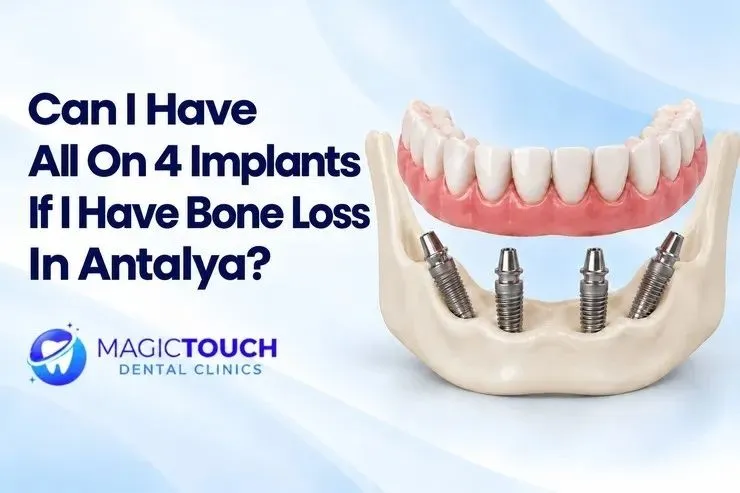
How does bone loss affect my suitability for all on 4 in Turkey?
Bone loss means your jawbone has become thinner or smaller. It often happens when you've been missing teeth for years. Gum disease can also cause it.
Jawbone loss plays a part in planning dental implant treatment. To assess whether all on 4 is suitable for you, dentists look at how much bone remains and where it is available.
There's no one bone measurement that applies to everyone. Your age alone doesn't rule you out either. Dentists use a 3D scan to measure your jawbone’s height and width and see how near the planned implant sites are to nerves and sinuses. These details help them assess whether all on 4 is safe for you.
Can you have all on 4 implants if you have bone loss in Antalya?
Has a dentist told you there isn’t enough bone in your jaw to support dental implants? Contact MagicTouch Dental Clinic in Antalya to discuss an assessment.
Free ConsultationWill I need a bone graft before all on 4?
Not always. Many patients can have all on 4 implants without a bone graft, even if they've lost some jawbone. But if you've lost too much bone, especially at the front of your jaw, a bone graft may be needed. A bone graft builds up areas that lack enough bone to support an implant.
What if I have severe bone loss?
If you have severe bone loss, there may not be enough bone left to hold your implants firmly in place. So, all on 4 may not be suitable for you.
We may consider a bone graft to build up the areas where you've lost bone. If you have the bone graft in a separate procedure, it will need time to heal before your dentist can place the implants.
If you've lost too much bone in your upper jaw, zygomatic implants may be another option. These longer implants attach to your cheekbone and may help you avoid a bone graft.
After checking your mouth and studying your 3D scan, dentists assess which option is safer and better suited to your jaw.
Would All on 6 be a better option?
Some patients may benefit more from all on 6, provided there is enough bone to hold all six implants. If you've lost too much bone, adding more implants may not be possible.
We plan the number of implants, their positions and the design of your new teeth around your needs. Six implants aren't always better than four. Your jawbone and treatment needs determine which option is more suitable.
How will the dentist check whether I have enough bone?
Your dentist will first examine your jaw and gums. They'll look at the shape of your jaw and check for areas where the bone may have become thinner or smaller. They'll also feel along your gums to check the width of the jawbone. This gives them an idea of how much bone you may have lost.
Next, they'll use dental imaging to look beneath your gums. A regular dental X-ray or panoramic X-ray can show the general shape of your jaw, bone levels, and areas where bone has been lost.
Your dentist may use a CBCT scan to examine your jawbone in more detail when planning dental implants. The scan shows your jawbone in three dimensions. It shows:
- How much bone height and width you have left.
- Where the bone is thick enough to hold an implant.
- Which areas have lost the most bone.
- How close the nerves and sinuses are to the planned implant positions.
What if my bone loss was caused by gum disease?
You may have all on 4 implants if your bone loss was caused by gum disease. But the relationship between gum disease and dental implants is one of the first things to consider before starting treatment. Any active gum disease must be treated before implant treatment begins!
Long-term and severe gum disease damages the bone that holds your teeth in place. If the infection in your gums continues, you may lose more bone. In these cases, it is harder for implants to stay firmly in place.
Your dentist will check how much damage the gum disease has caused. Briefly, your gums must be healthy and the infection under control before dental implant surgery!
Frequently Asked Questions
Yes, you may get fixed temporary teeth on the same day, even with bone loss. Your implants must be firm enough to hold them. If they aren't stable enough, the implants will need time to heal before fixed temporary teeth can be fitted.
Yes, you may still have all on 4 implants after wearing dentures for many years. But your jawbone can shrink over time when teeth are missing. Your dentist will check if there's enough bone left to hold the implants.
No, the amount of bone remaining in your jaw cannot be assessed from photos. They only show the outside of your mouth and gums. Your dentist needs dental X-rays or a 3D scan to check the bone beneath your gums and see if there's enough to support all on 4 implants.
Popular Treatments