Porcelain veneers
costs and procedure
in Antalya, Turkey
Porcelain dental veneers are one of the most preferred aesthetic dentistry applications for those who want to have a beautiful smile. These veneers, which can usually solve the appearance problems of the teeth in a single session, are specially prepared in accordance with your tooth structure. It offers a natural and impressive result with little intervention. Moreover, it can maintain its durability for many years while protecting your teeth.
What is a porcelain veneer?
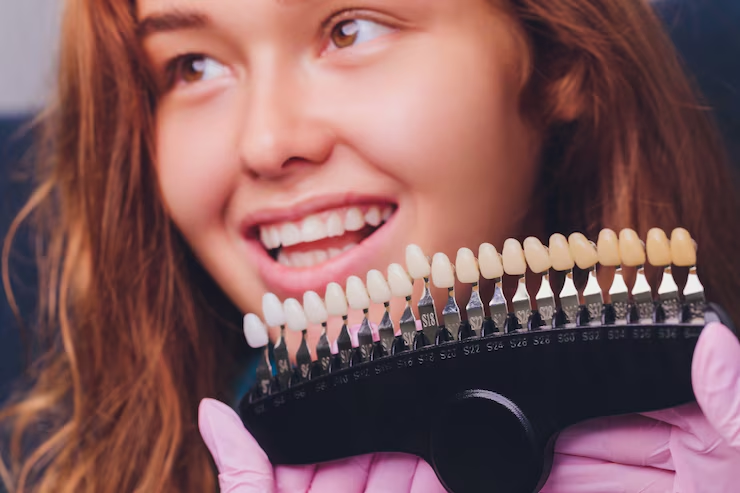
A dental veneer Antalya is a thin veneer, usually made of porcelain or composite resin, 0.3-1 mm thick, which is attached to the front surface of the tooth with a special adhesive to enhance the appearance of the teeth and correct minor defects.
What are the types of dental veneers?
Dental veneers are divided into several different types according to the material used and the way they are made:
Porcelain veneers
- Made of porcelain or ceramic, they are very strong and stain-resistant.
- It gives a beautiful appearance very close to the natural color and brightness of the teeth.
- Measurements are taken in the clinic, prepared in the laboratory, and bonded to the tooth.
- It is generally used for 10-15 years without any problems.
Composite veneers
- It is made of a material called composite resin; it is cheaper than porcelain.
- It can be useddirectly on the tooth or prepared in the laboratory.
- It is not as durable as porcelain, may stain, and may need to be replaced in 5-7 years.
- Most of the time, less enamel is abraded than the tooth; sometimes it is not necessary at all.
Laminate veneers
- A thinner version of porcelain veneers.
- Sometimes it can be usedwithout any tooth abrasion, so it is also called an ‘unprepared veneer.’
- It is suitable for those who want a natural and thin appearance.
Purposes and areas of use of porcelain veneers
Antalya porcelain veneers are thin and strong veneers used to improve both the appearance and some functions of the teeth. It is a great option to create an aesthetic smile or to solve minor problems in the teeth.
Purposes of Antalya porcelain veneers
A more beautiful appearance
- It makes the smile more attractive by adjusting the color, shape, or size of the teeth.
- It offers a shine and transparency very similar to natural teeth, and no one looking from the outside can tell that it is a veneer.
Covering dental imperfections
- Hides stains, cracks, fractures, or deformities of the teeth.
- It covers permanent discoloration or damage to the enamel.
Correcting gaps and curvatures in teeth
- Closes small gaps or slight crookedness between teeth.
- It offers a faster solution instead of long-lasting procedures such as braces.
Tooth protection
- Veneers weakened or worn enamel, making teeth stronger.
Uses of Antalya porcelain veneers:
Color problems
- Stubborn stains that teeth whiteningdoes not cure (such as marks left by certain medications).
- Yellowed, discolored, or congenitally dark teeth.
Shape and size corrections
- To make small, short, or disproportionate teeth look straighter.
- Repairing broken, cracked, or worn teeth.
Tooth gaps
To close small gaps between teeth (so-called diastema).
Slightly crooked teeth
To correct minor crowding or misalignment of the teeth (without braces).
Enamel damage
Correction of enamel wear, thinning, or congenital enamel defects.
Perfect smile design
For those who want a symmetrical and bright smile (for example, a Hollywood smile). It is generally used on the front teeth, i.e., 6-8 teeth that are visible when smiling.
Which tooth types are suitable for the application of porcelain veneers?
Porcelain veneers give super results, especially on the front teeth, to beautify your smile. Which teeth will be treated depends on the dentist's control, the shape of your smile, and the condition of your teeth. You can talk to your dentist and make the most suitable plan.
Porcelain veneers are usually used to the following teeth:
Front teeth (incisors)
The front four teeth in the upper and lower jaw (the center ones) are the most visible when smiling. Porcelain veneers are a suitable option for correcting yellowing, stains, cracks, fractures, gaps, or shape problems in these teeth.
Canine teeth
The pointed teeth next to the front teeth play an important role in the smile. Porcelain veneers are often used to correct the color, shape, or size of these teeth.
Premolars (rare)
Sometimes veneers can be usedto premolars (especially the upper ones), which are slightly visible when smiling. But this depends on the smile and what the person wants.
To which teeth can porcelain veneers not be procedured?
- Back teeth (molars): Since chewing pressure is high, fillings or crowns are used here instead of veneers.
- Very weak teeth: Veneers may not be suitable for teeth with little enamel or very decayed teeth.
- Very crooked teeth: It works for mild curvatures, but serious alignment problems require braces.
Who are suitable candidates for porcelain veneers?
Those with appearance problems in their teeth
- Those whose teeth are yellowed, stained, or have color problems that do not improve with whitening.
- Those with small gaps (gaps) between the teeth.
- Those with slightly crooked, short, small, or misshapen teeth.
- Those with cracks, fractures, or wear on their teeth.
Those with healthy mouths and gums
- Those with healthy gums (no inflammation or gum disease).
- Those whose tooth enamel is strong enough for the veneer to adhere.
- Those without caries or major tooth damage (if present, these will be corrected first).
People with mildly crooked teeth
Those who do not want braces but have minor crowding or misalignment problems. Veneers can solve such minor problems aesthetically.
Those who want to beautify their smile
- Those who dream of a smoother, brighter, and more natural smile (e.g., a Hollywood smile).
- Especially those who want to make their front teeth (upper and lower front teeth, canines) more beautiful.
Those who know what to expect
- Those who understand what veneers can do and their limitations.
- Those looking for a long-term, robust solution (can be used for 10-15 years with good care).
Who is not suitable for porcelain veneers?
- Those with advanced gum disease or untreated decay.
- People with very thin or damaged tooth enamel (the veneer may not hold).
- If the teeth have severe curvature or misalignment, braces or clear aligners are needed instead of veneers.
- If you have a habit of clenching or grinding your teeth at night, this can damage the veneers. This habit should be controlled first (e.g., with a night plaque).
- People who have the habit of biting hard things such as fingernails, pencils, walnut shells, etc., because the veneers may crack.
- People who do not brush their teeth regularly or do not pay attention to oral hygiene can shorten the life of the veneers.
What are the advantages and disadvantages of porcelain dental veneers?
Porcelain dental veneers, while frequently preferred as a treatment method in aesthetic dentistry, have both advantages and disadvantages. These advantages and disadvantages are as follows:
Advantages of porcelain veneers
- Antalya porcelain offers a shine and transparency very similar to natural tooth enamel. Your teeth look white, symmetrical, and natural; no one will realize they are veneers.
- Color, shape, and size can be customized, so you get exactly the smile you want.
- Things like tea, coffee, and cigarettes do not easily stain porcelain. It stays bright and clean for a long time.
- If it is well looked after, it can be used for 10-15 years, sometimes even longer. It is very strong against breakage and abrasion.
- Results are obtained in a short time (usually 1-2 weeks) without the need for long processes such as wire treatment for slight crookedness, gaps, cracks, or color problems.
- Only a thin layer of enamel is removed from the tooth, so most of the tooth is preserved. In some cases, no abrasion may even be required (prepless veneers).
Disadvantages of porcelain veneers
- It is a permanent procedure because a little of the enamel is shaved away. If you remove the veneer, your tooth cannot be restored; it needs to be replaced with another veneer.
- Porcelain veneers are more expensive than composite veneers.
- Although they are very strong, biting hard things (such as walnuts, pencil tips, or fingernails) or teeth grinding (bruxism) can damage the veneers, cracking or breaking them.
- Care must be taken with hard foods.
Care of porcelain veneers
To prolong the life of your porcelain veneers and always have a radiant smile, here are the care rules to follow:
- Brush twice a day with a soft-bristled toothbrush and a non-abrasive toothpaste.
- Clean the junction of the veneers with the gums using dental floss or an interdental brush.
- Complete daily care with an alcohol-free mouthwash.
- Avoid chewing hard foods (ice, nuts, hard candies).
- Sticky foods (chewing gum, caramel) increase the risk of displacement of veneers.
- Acidic drinks can affect the gum line; limit consumption.
- Habits such as nail biting and pen biting can damage the veneers.
- The use of a night plaque is recommended for those with teeth-clenching problems.
- Smoking can cause discoloration of the veneer-gum border.
- Visit your dentist every six months.
- Consult your dentist only for professional cleaning.
- If your veneer breaks or falls off, keep it and contact your dentist immediately.
- Rinse your mouth after stained drinks such as coffee, tea, and red wine.
- Have your veneers polished once a year to keep them shiny.
- Use special care products recommended by your dentist.
- Take care of your gum health to prolong the life of your veneers.
- Every 10 years, evaluate the condition of your veneers with your dentist.
F.A.Q
Is there any pain during and after porcelain veneer procedure?
- No pain is felt during the procedure thanks to local anesthesia.
- Mild tenderness is normal in the first 24-48 hours after the procedure
- Sensitivity usually goes away on its own; if necessary, desensitiser toothpaste is recommended
Do veneers affect masticatory function?
- Well-planned veneers do not adversely affect chewing
- Slight adaptation problems are normal in the first few days
- If there is persistent discomfort, a dentist should be consulted
Can porcelain veneers be used to young patients in Antalya?
Under 18 years of age, it is generally not applied. Tooth development should be completed. In exceptional cases (trauma, etc.), it can be evaluated.
How long can temporary veneers be used?
- Usually used between 1 and 3 weeks
- Very fragile, handle with care
- Its stickiness decreases over time
- Permanent veneers are removed when ready
Do veneers affect magnetic resonance (MR) imaging?
- Porcelain does not show magnetic properties
- Does not distort the MRI image
- However, the presence of metal-supported restorations should be reported
- There is no harm in completely porcelain veneers
Will the teeth return to their original color when the veneers are removed?
- Because the tooth surface has been abraded, teeth without veneers look smaller, and the color difference can be significant.
- After removal, alternatives such as new veneers, composite fillings, or crowns are usually required.
What should I do if my porcelain veneer breaks?
What to do when porcelain veneers are fractured may vary depending on the cause of the fracture, its size, and the aesthetic problem it creates. In case of a fracture in porcelain veneers, it is important to first consult a dentist and get a professional evaluation. Depending on the size and cause of the fracture, the veneer may need to be repaired or replaced. In addition, appropriate precautions should be taken to prevent fractures from recurring, and regular dental check-ups should not be neglected.
What is the price of porcelain dental veneers?
The price of porcelain dental veneers Antalya varies between 150 and 300 euros depending on the selected clinic, the material used, and the scope of treatment. Since prices may vary depending on your treatment plan, it is recommended that you contact our clinic, MagicTouch Dental Clinic, directly to get information about the current price.
Popular Treatments