
Can You Whiten Composite Bonding?
Why doesn't teeth whitening work on composite bonding?
Let me explain it the way I usually tell patients. Whitening gels work by going into the enamel and breaking down stains inside the tooth structure. So, they don't just 'clean the surface,' they actually change the color from within.
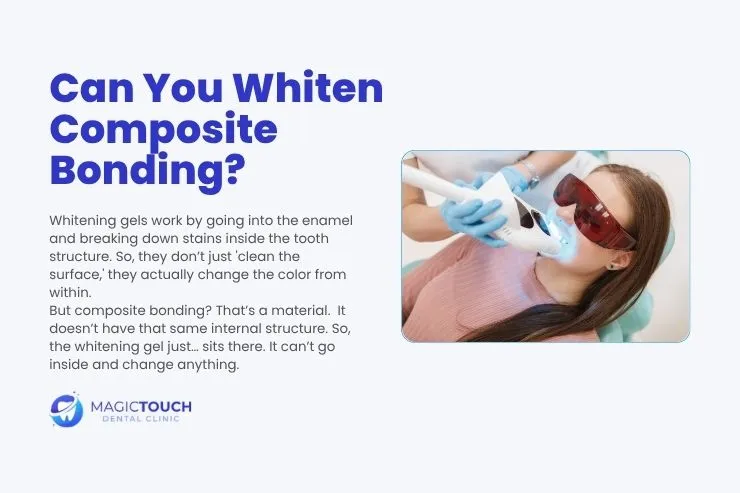
But composite bonding? That's a material. A resin. It doesn't have that same internal structure. So, the whitening gel just… sits there. It can't go inside and change anything.
That's why people sometimes say, 'My teeth got whiter, but this part didn't.' Because, natural enamel responds, but composite doesn't.
There's solid research on this too. Studies show that bleaching agents like hydrogen peroxide can lighten natural teeth but have little to no effect on composite resin materials.
And honestly, it can even make things more noticeable. Because your real teeth get lighter, but the bonding stays the same shade. So, the difference becomes more obvious.
So, what do we do instead?
Usually, after whitening, we either polish the bonding or replace it to match the new tooth color. That's the cleanest way to get everything looking even again.
What happens if you whiten teeth with composite bonding?
This is where people get confused. You whiten your teeth, you expect everything to look brighter more even. But then you look in the mirror and something feels off. One part is lighter, one part isn't. What actually happens is this: your natural teeth get whiter, but the composite bonding stays the same color.
Composite materials don't respond to bleaching the same way natural enamel does, so you end up with a mismatch after whitening.
In some cases, bleaching can remove surface stains from composite a little bit, but it doesn't truly change its internal color. So, it might look slightly cleaner… but not actually whiter. That's why patients sometimes say, ‘It looks worse after whitening.' Not because something went wrong, but because the contrast became more obvious.
Bleaching agents can also affect the surface of composite materials, making them slightly rougher or changing how they reflect light.
So now you have:
natural teeth getting lighter
bonding staying the same
and sometimes even looking a bit duller.
How long does composite bonding stay white?
Usually, composite bonding stays white for about 2 to 5 years before you start noticing some change.
But honestly, that timeline isn't fixed. It depends a lot on habits… things like coffee, tea, smoking, even how well you clean around it. Composite doesn't stain the same way as natural teeth, but it does pick up surface discoloration over time, so how you treat it day to day really makes the difference.
How can dentists improve the color of composite bonding?
We don't whiten it… we fix or refresh it. Most of the time, the first step is simple polishing. If the bonding has picked up surface stains, we clean and polish it, and honestly, it can look noticeably better right away.
If the color still doesn't match, then we adjust it. That usually means removing a thin outer layer and adding fresh composite in a better shade. Not the whole thing, just the part that needs it.
And if the mismatch is obvious, especially after whitening, we replace the bonding completely to match the new tooth color. So, in real life, it's three options:
polish it, adjust it or redo it.
That's how we get the color back on track.
Professional polishing to remove surface stains
Sometimes the bonding isn't actually ‘discolored,' it's just picked up surface stains over time. Coffee, tea, smoking… they leave a thin layer on top.
In those cases, we don't change the bonding, we just polish it. A proper professional polish removes that outer layer and brings back a cleaner, brighter look. Not a new color, but a noticeable refresh.
Recontouring and resurfacing the bonding
Sometimes polishing isn't enough. The bonding may look a bit dull, uneven, or slightly off in color… and you can't fix that just by cleaning the surface. Recontouring basically means reshaping. We adjust the form of the bonding a little, smooth out uneven areas, fix small edges, make it look more natural.
Resurfacing is about the outer layer. We refresh that top surface, sometimes by lightly removing it and adding a thin new layer of composite so it looks cleaner and brighter again. So instead of removing everything, we kind of 'update' the bonding. Keep what's working, fix what's not.
These work are really important! A smoother surface reflects light better and also picks up less staining over time. That's actually shown in research, rougher composite surfaces tend to stain more and lose their shine faster.
Replacing old composite bonding with new material
This is rare and only done if you strongly need it. You can polish it, you can reshape it, you can try to improve the surface… but the color still doesn't match. That's usually when we stop trying to 'fix' it and simply replace it.
What we do is remove the old composite carefully, clean the area, and place a new layer with the right shade. And honestly, this is where you get the best result. Because now we're not adjusting the old color, we're starting fresh.
This is especially common after laser teeth whitening Antalya. The natural teeth get lighter, but the bonding stays the same… so replacing it is the only way to make everything match again.
And there's a clinical reason for this too. Composite materials change over time, they can discolor, lose surface quality, and even their optical properties can shift. That's why older restorations sometimes just can't be 'brought back' fully.
How to prevent problems with composite bonding
Most bonding problems don't just happen. They build up slowly. Little habits, repeated every day...
So, if you want your bonding to stay clean, smooth, and close to its original color, You should be consistent with a few simple things.
First, watch what you drink. Coffee, tea, etc… they're not 'forbidden,' but if you sip them all day, bonding will pick up stains faster. I usually tell patients, drink it, enjoy it… just don't let it sit on your teeth for hours.
Second, brushing matters more than you think. Not aggressive brushing, just regular, proper cleaning. Composite doesn't stain like enamel, but it does hold surface stains if plaque sits there.
And honestly, polishing at the dentist is very good way. Coming in once in a while for a quick polish can keep the surface smoother and brighter.
There's also research behind this. Studies show that smoother composite surfaces resist staining better, while rougher ones pick up discoloration more easily over time.
One more thing people forget… smoking. If you smoke, bonding will discolor faster. That's just the reality of it.
So really, there's no secret trick here. Keep it clean, don't overload it with staining habits, and maintain it from time to time.
Can you whiten composite bonding at home?
No, you can't whiten composite bonding at home. Whitening products only work on natural tooth structure, not on composite material. At best, they may remove slight surface stains, but they won't actually change the color of the bonding.
Does hydrogen peroxide whiten composite bonding?
No, hydrogen peroxide does not whiten composite bonding. It works on natural enamel by breaking down internal stains, but composite resin doesn't respond the same way, so its color stays unchanged. Studies show bleaching agents have minimal effect on the color of composite materials and mainly affect natural tooth structure.
How to whiten composite bonding at home with baking soda
You can't actually whiten composite bonding with baking soda. Just be careful, because baking soda is abrasive, and over time it can scratch the surface of the bonding and make it stain even faster.
Contact Magic Touch Dental Clinic Antalya for detailed info.
Popular Treatments