How to clean veneers at home
A proper care routine is vital for extending the life of your new porcelain or Emax veneers and maintaining their aesthetic appearance. Although veneers offer a level of resistance similar to that of natural tooth enamel, the surrounding tissues are living, and if not cleaned properly, decay can form at the edges of the veneers. In this guide, you will find detailed tips on how to safely clean your veneers at home.
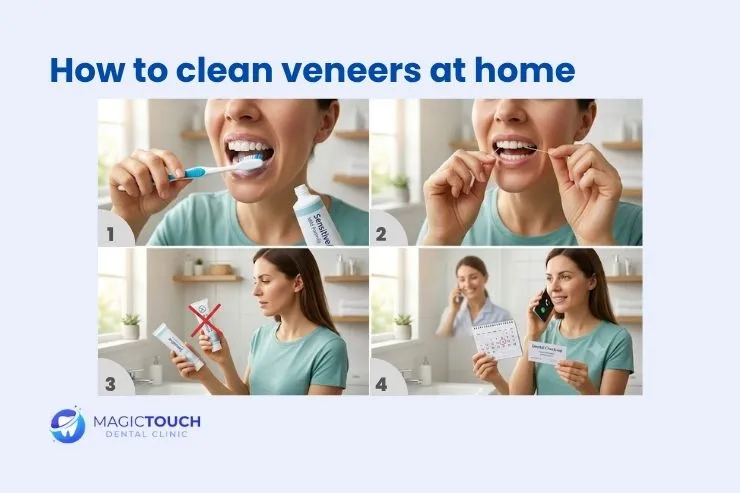
4 Steps for cleaning veneers
Although caring for veneers is very similar to looking after your natural teeth, it is important to pay attention to certain details in order to preserve the aesthetics and longevity of the restoration.
1. Brush your teeth regularly
Regular and proper brushing not only cleans the veneers, but also minimises the risk of gum recession (gingival recession), thereby preventing the veneer margins from becoming exposed and avoiding aesthetic issues.
It is recommended that you brush your teeth at least twice a day, for two minutes each time, using the correct technique. This routine helps to keep plaque build-up under control, thereby maintaining the health of the gums around your veneers. Although veneers are made of artificial, non-living materials, the natural teeth beneath them and the margins where veneer meets the tooth are still susceptible to decay; therefore, thorough cleaning is essential.
Choosing the right toothbrush
You must always use a soft or ultra-soft toothbrush when brushing. Hard-bristled brushes can, over time, wear away the delicate polish and shine on the surface of porcelain veneers, causing the surface to become dull. Both manual and electric toothbrushes are suitable for this purpose.
Brushing technique
Excessive pressure should be avoided while brushing. Brushing the teeth with gentle, circular movements effectively removes ,plaque from the gum line while protecting the porcelain surface.
Choice of toothpaste
The properties of the toothpaste used are crucial for the longevity of the porcelain:
- Non-abrasive toothpastes:Whitening toothpastes or those specifically designed for smokers are highly abrasive to porcelain and can damage the polish. Therefore, toothpastes with low abrasiveness should be preferred.
- Fluoride content:Dentists recommend fluoride-containing toothpastes to strengthen the edges of the veneers and prevent new cavities.
2. Use dental floss and interdental brushes
Dental floss should be used regularly every day to remove plaque from the areas between the teeth that a toothbrush cannot reach and from beneath the gum line. Regular flossing minimizes the risk of gingivitis and periodontal disease. Deterioration in gum health is one of the most significant factors shortening the lifespan of veneers. Gum recession (gingival recession) compromises the aesthetic appearance by exposing the margins of the veneer or the tooth root. By preventing such recession with dental floss, the appearance of your ‘new smile’ can be preserved for many years.
- Frequency: To ensure maximum aesthetics and longevity, it is recommended that you floss your teeth at least once a day.
- Choosing the right product: If you do not have a dental bridge, you should opt for fine-textured dental floss for all your teeth. In areas with wider gaps, interdental brushes recommended by your dentist may be used.
3. Avoid teeth whitening products
There are two main reasons why you should avoid whitening products if you have porcelain veneers: these products do not work on porcelain and, more importantly, they can cause damage that may shorten the aesthetic lifespan of your veneers.
- High risk of abrasion: Regardless of their intended purpose, ‘whitening’ toothpastes—and particularly those marketed specifically for smokers—generally contain highly abrasive ingredients. The hard particles in these products can, over time, wear away the glass-like smooth polish and luster of the porcelain.
- Avoid bicarbonate of soda and harsh substances: The use of bicarbonate of soda or other abrasive powders for cleaning at home is strongly discouraged. These substances create microscopic scratches on the porcelain surface. Surfaces that have lost their polish and become scratched cause porcelain—which normally does not stain—to absorb external stains (such as coffee, tea, wine, etc.) much more quickly and permanently.
4. Professional care and cleaning at the dentist
While the meticulous oral care you practice at home may extend the lifespan of your porcelain veneers, professional dental check-ups and cleanings are essential to maintain the aesthetic and functional success of these restorations. Patients with veneers are advised to attend regular check-ups every six months (at least twice a year).
However stain-resistant your porcelain veneers may be, over time small, superficial stains caused by external factors such as coffee, tea, or cigarette smoke can build up on their surfaces. While brushing at home may remove some of these stains, a professional touch is required to preserve the dazzling shine your veneers had on the very first day. Dentists use a special, non-abrasive polishing paste, specifically formulated for veneers, to remove this type of surface discoloration.
This professional polishing treatment is designed to restore the ‘glass-like’ smoothness and original shine of your veneers.
Regular professional polishing is one of the most important maintenance steps for extending the life of your veneers and ensuring your smile always looks fresh.
F.A.Q
Vinegar is acidic and carries the risk of weakening the surface structure of coatings or the adhesive cement layer; it is therefore not recommended for use in the home for cleaning purposes. Instead, rinsing with alcohol-free, antiseptic mouthwashes or salt water is a much safer option
Bicarbonate of soda is a highly abrasive substance and scratches the protective glaze on porcelain, causing the surface to become dull. Scratched porcelain surfaces will start to absorb stains much more quickly.
The only way to keep the tooth beneath the veneer clean is to meticulously maintain the margins of the veneer and the gum line. To control plaque build-up, you should floss daily and brush the margins with fluoride toothpaste. Special fluoride toothpastes prescribed by your dentist can help prevent the tooth underneath the veneer from decaying by strengthening the margins of the veneer.
MagicTouch Dental Clinic is one of Turkey’s leading dental clinics, offering modern and affordable dental treatments. If you are considering having Emax veneers fitted in Antalya, please get in touch with us.
Popular Treatments